What you need to start
The protective gear, tools, hive parts and safety items to have ready before your bees arrive, and what can wait until later.
A new beekeeper needs less equipment than the catalogues suggest. Work down the lists below: everything under “Must have” should be ready before the bees arrive.
Step 1: Must have before bees arrive
Tick each item off.
Protective gear
- Veil. This is the one item treated as essential, because stings to the face are painful and hard to prevent any other way.
- Jacket or full suit, in a light colour. A half jacket with an attached veil, worn with long trousers, is a common choice. A full suit protects more but is hotter. Look for ventilated fabric.
- Gloves. Optional for some keepers, but most beginners are better off with them. Thin, snug leather or nitrile gloves let you feel the frames.
- Enclosed boots, such as gumboots, plus tape, elastic or straps to seal trouser and sleeve openings.
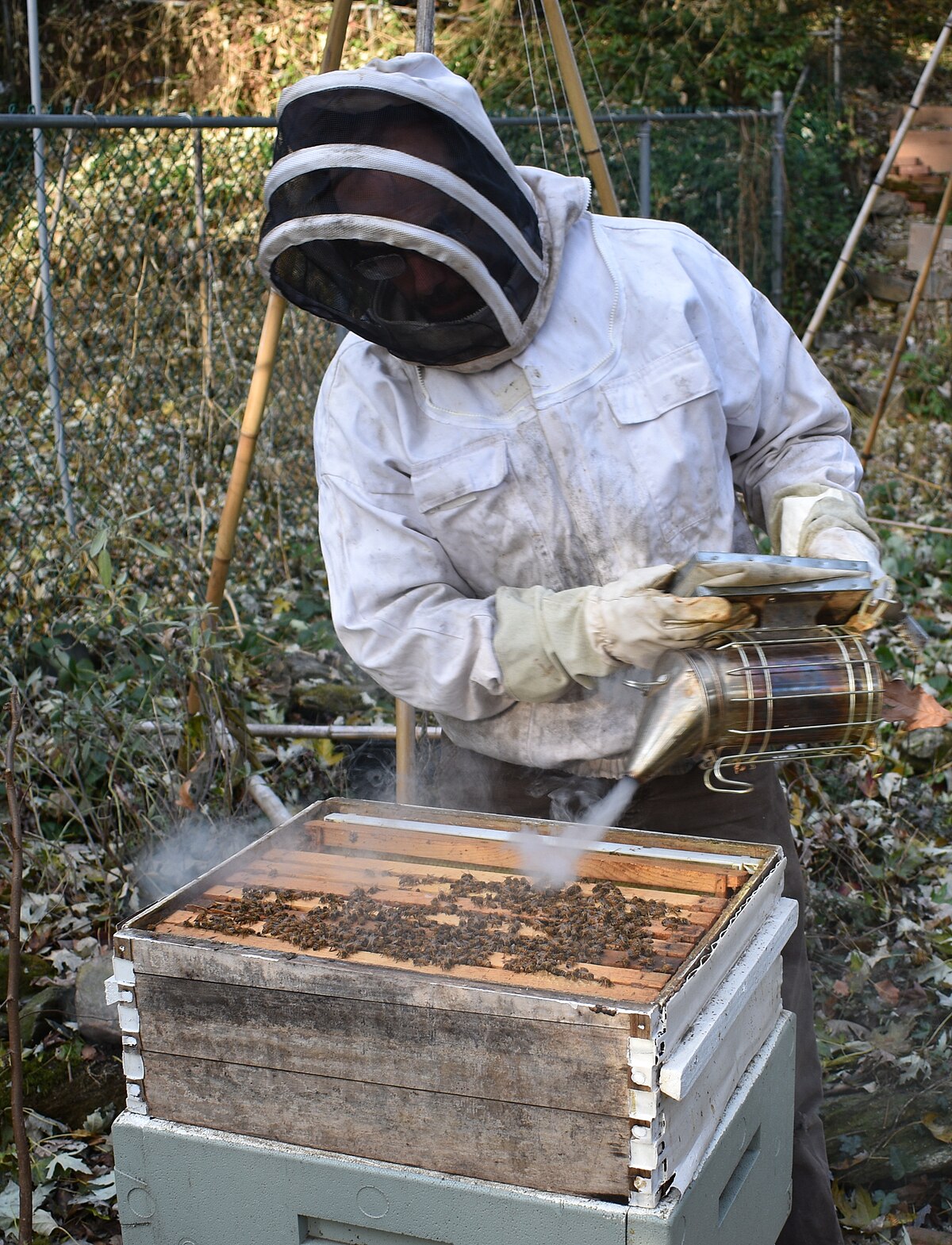

Light colours such as white or khaki are the usual advice. They are cooler to work in, and some studies suggest bees react less to them than to dark clothing. The evidence is limited, so treat colour as one small factor alongside calm movement. Fasten every zip and cuff before you open a hive.
Tools
- Smoker, ideally with a heat shield. It burns slow-smouldering fuel to make cool smoke, which masks the alarm signals bees release. Practise lighting it before the bees arrive.
- Smoker fuel: dry, natural, untreated material such as hessian (burlap) sacking, dry pine needles, corrugated cardboard or untreated cotton cloth. Avoid anything treated with chemicals or accelerants, since it can give off harmful fumes.
- Hive tool. A flat metal lever for prising apart boxes and frames the bees have glued together with propolis, and for scraping wax.
- Bee brush, for gently moving bees off frames.
Check your state fire authority for the current rules on using a smoker, particularly on total fire ban days and in dry, windy conditions.
The hive
- A complete hive: base, brood box, lid, and frames to hang inside. In Australia, the Langstroth hive is the most common type and is widely recommended for new beekeepers. Choosing a hive compares it with the other designs.
- Frames, assembled. Many suppliers sell boxes and frames “in the flat”, which is cheaper but needs assembling, so allow time. Start with wired frames fitted with foundation (sheets of beeswax pressed with a cell pattern, which guide the bees to build straight comb).
Health checks
- Varroa mite monitoring kit (see below).
- Small hive beetle trap, where beetle occurs in your area. Several types exist, including traps fitted under the hive, between the frames, or built into the bottom board. Ask your state department or local club whether beetle is a problem where you live.
Site and paperwork
- Registration complete. Hive registration is a legal requirement in each state and territory and needs to be done before you get bees. Fees, hive identification rules and renewal periods differ by state: see Registering your hives.
- Hive stand, pallet or blocks, to keep the base off damp ground.
- A prepared site (see Step 3) and a water source.
- Record book (see Step 4).
- First aid supplies and a plan for severe allergic reactions (see Step 5).
Step 2: Set up varroa monitoring
Neither this nor a beetle trap replaces learning to recognise pests and diseases, which is covered in Pests, Diseases and Biosecurity.
As at October 2026, varroa mite is a notifiable pest in every Australian state, and the National Varroa Mite Management Program ceased on 6 February 2026. It has been detected in New South Wales, Victoria, Queensland, South Australia and the ACT, and Tasmania reports that it is still free of the mite. State governments now provide the current local advice. Official advice is to monitor hives regularly rather than rely on a visual check.
| Method | How it works | Notes |
|---|---|---|
| Alcohol wash | A sample of about 300 bees is shaken in alcohol to dislodge mites | The sampled bees die |
| Sugar shake | Bees are shaken with icing sugar | Leaves most bees alive but is less sensitive |
Neither method detects mites inside capped brood cells. Follow your state’s rules and current guidance for how often to test and what to report.
Step 3: Prepare the site
- Set the hive on a stand, pallet or blocks so the base is off the damp ground.
- Choose a spot with some shelter from wind and room to work behind and beside the hive.
- Put a screen or fence in front of the entrance. It makes bees fly up and over, away from people and neighbours.
- Keep the flight path away from paths, doors and places where people regularly pass.
- Give the bees a water source close to the hive before they arrive. Otherwise they may find a neighbour’s pool instead.
- Check your local council’s rules on hive numbers and placement.
Step 4: Start a record book
Keep a simple notebook or digital log for each hive. Note the date, what you saw, and what you did. Records of hive locations, activities and performance show how a colony changes over time. Record keeping is also covered in the national beekeeping Code of Practice.
Step 5: Plan for stings
Beekeepers get stung, so plan for it before the first inspection.
| Situation | What to do |
|---|---|
| A sting | Scrape or flick the sting out sideways with a fingernail or card rather than pinching it, which can squeeze in more venom. Wash with soap and water and use a cold pack wrapped in a towel. An oral antihistamine can ease itching. |
| Signs of anaphylaxis: difficult or noisy breathing, swollen tongue or throat, wheeze, hoarse voice, dizziness or collapse, and for insect stings, tummy pain or vomiting | This is an emergency. Use an adrenaline injector if one is available, then call 000. The ASCIA first aid plan sets out the steps. |
| You or someone in your household has had a serious reaction to a sting | Talk to a doctor before you buy bees. Healthdirect and ASCIA advise seeing a doctor after a serious reaction, and treatment to reduce venom allergy is available. |
This page is general information and not medical advice. For non-emergency questions, you can call healthdirect on 1800 022 222.
Can wait
- Honey extractor, uncapping tools and storage buckets. Ask a local beekeeping club whether you can borrow or share an extractor before buying one.
- Extra honey boxes (supers) and a queen excluder, which is optional.
- Frame grip, a clamp that helps you lift the first frame out of a crowded box.
- Spare hive tools, a second veil and extra gloves.
Prices vary widely between suppliers and change often, so this page gives none. A local beekeeping club is a good place to ask what to buy first and what to borrow. Next: Getting bees.
Photo credits
- Beekeeper with smoker: Ich, Wikimedia Commons, CC BY-SA 4.0.
Sources
Every fact on this page was checked against at least two independent sources.
- Beginning beekeeping in MississippiMississippi State University ExtensionResearch and industry
- Backyard beekeepingOrara Valley HoneySupporting
- How to start beekeeping at home or on your farmlandGrainshedSupporting
- Everything you need to start beekeepingBeekeeping GearSupporting
- Smoker fuels are as varied as beekeepersHoney Bee SuiteSupporting
- Why are bee suits white?Beekeeping for NewbiesSupporting
- Bee and wasp stingshealthdirect AustraliaOfficial
- First aid plan for anaphylaxis (EpiPen)Australasian Society of Clinical Immunology and Allergy (ASCIA)Research and industry
- Surveillance for exotic pestsBeeAware (Plant Health Australia)Official
- Small hive beetleBeeAware (Plant Health Australia)Official
- National Varroa Mite Management ProgramNational Varroa Mite Management ProgramOfficial
- Beekeeping 101Australian Honey Bee Industry CouncilResearch and industry
- BeesQueensland Government (Business Queensland)Official
- Varroa miteBiosecurity Tasmania (Tasmanian Department of Natural Resources and Environment)Official
- Check hives for varroa miteQueensland Government (Business Queensland)Official
- Honey bees and beekeepingNorthern Territory GovernmentOfficial
- Choosing an apiary locationMississippi State University ExtensionResearch and industry
- Australian Honey Bee Industry Biosecurity Code of PracticeBeeAware (Plant Health Australia)Official
- Varroa mite (Varroa destructor)Outbreak.gov.au (Australian Government)Official