Small hive beetle
How to check for small hive beetle, what to use against it in Australia, how to treat affected gear, and what to report in your state.
Small hive beetle (Aethina tumida) is a small, dark beetle whose larvae tunnel through comb and ruin honey. It is established in New South Wales, Queensland, Victoria, the ACT and parts of South Australia, and it causes the most trouble in warm, humid coastal areas. In Western Australia it is found only in the Kimberley region. Weak colonies, and honey frames waiting to be extracted, are most at risk. This guide covers how to check for it, what to use, and what your state asks you to report.
Rules and approved products change often. This page is current as at October 2026. Check your state’s page (linked in the table below) before you act.
Part 1: Check your hives
What to look for
- Adult beetles are 5 to 7 mm long, broad and flattened, with clubbed antennae. They are yellowish-brown at first and darken to brown or black. When you open a hive they run away from the light into dark places.
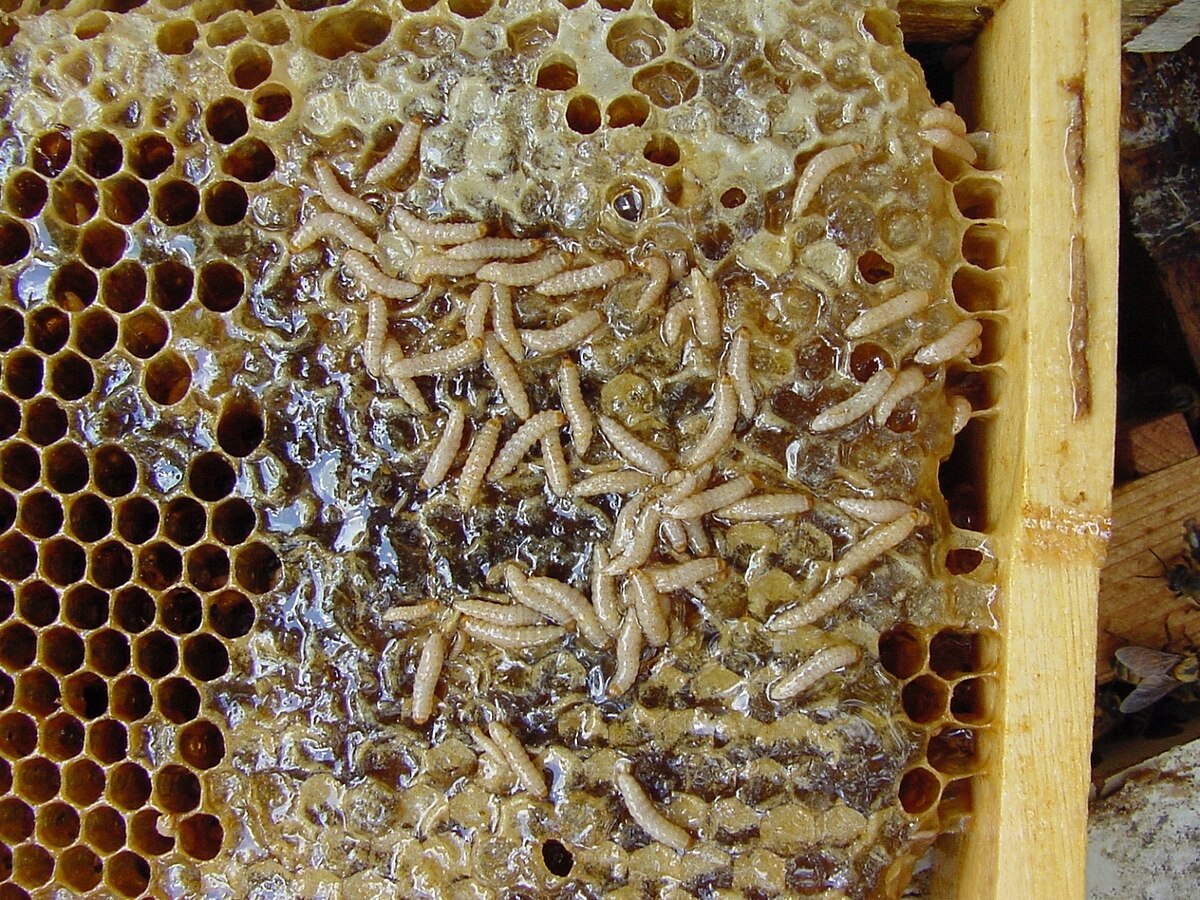
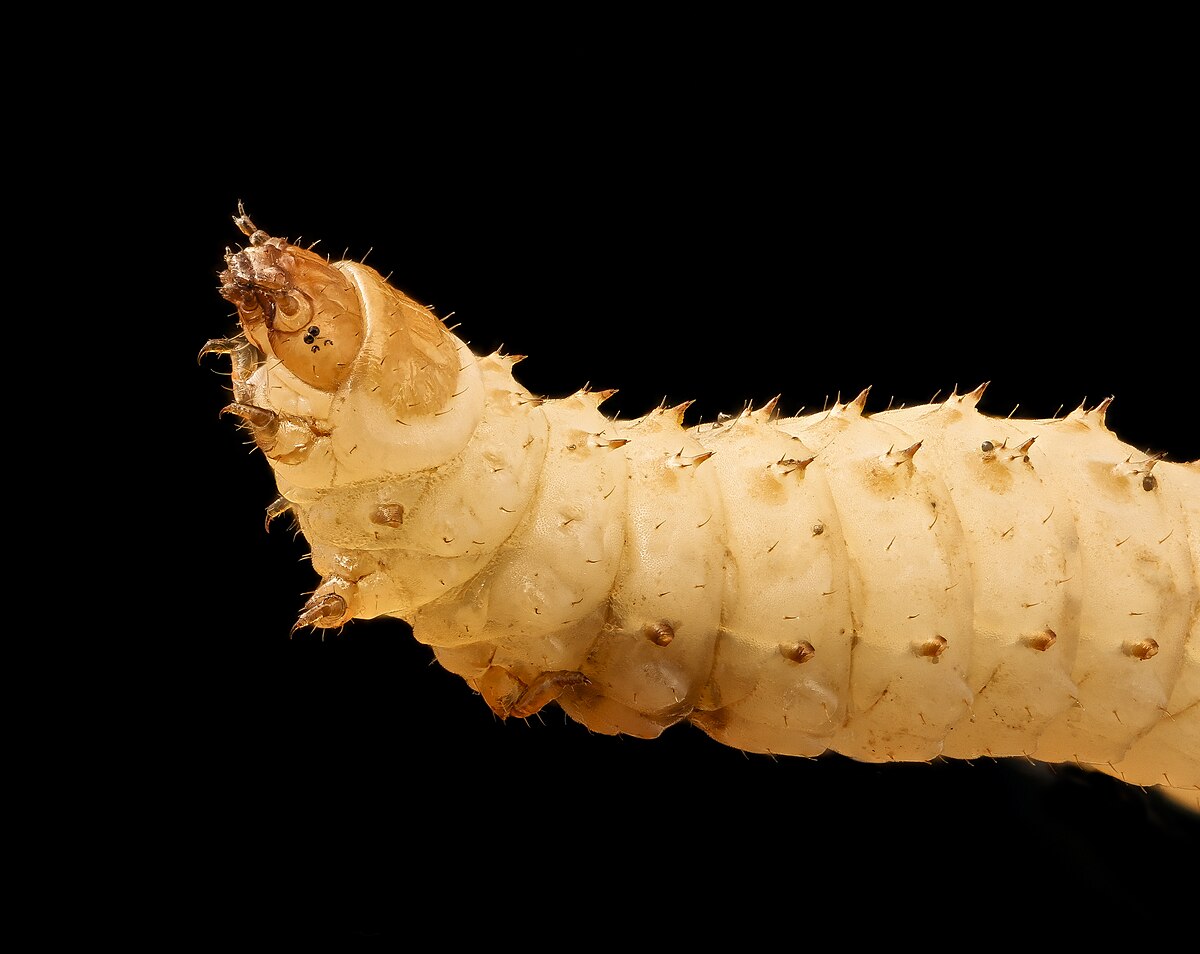
- Larvae are creamy white and about 1 cm long, with six legs near the head and two rows of short spines down the back.
- Damage: wet, greasy, slimy honey on the comb, honey that froths and smells like rotting oranges, and tunnelled comb. In a heavy infestation the colony may die or abscond (leave the hive).
Beetles can be in a hive without obvious damage and are hard to find when numbers are low. Larvae can look like wax moth larvae, but wax moth larvae are larger (about 25 mm), have no rows of spines, and leave silk webbing. See Wax moth.

Gear you need
- Your usual protective gear, smoker and hive tool. See Your first inspection.
- A hive beetle trap if you want to monitor beetle numbers between inspections (types are listed in Part 2).
- A small container to collect larvae for identification, if you need advice.
How to check a hive
- Take off the lid (and the mat, if there is one) and look at the underside for beetles.
- Stand the removed box on the upturned lid. Wait a few minutes, then lift the box off and look in the lid, where beetles hide from the light.
- Check the bottom board, especially debris and the dark back corners.
- Look over the honey and brood frames for beetles and larvae.
- Write down what you found, the hive and the date.
Opening a hive can trigger female beetles already inside to lay eggs. Agriculture Victoria advises keeping hive opening to a minimum, while still doing the inspections you need.

Part 2: Treat and report
Approved products
No single method clears the beetle. BeeAware and Business Queensland describe a mix of traps, clean handling of honey and comb, and, in some cases, a registered chemical device inside the hive. Check products on the APVMA register (checked 31 October 2026) before you buy.
| Type | Product | Active ingredient | APVMA status |
|---|---|---|---|
| In-hive harbourage trap (bees cannot reach the insecticide) | Apithor Hive Beetle Harbourage Insecticide | Fipronil | Registered |
BeeAware and Business Queensland both name Apithor. Business Queensland calls it the only registered chemical trap permitted as an inner-hive control measure. BeeAware does not recommend chemical treatment of stored equipment, comb or honey. There are no current APVMA permits for small hive beetle, so don’t use soil drenches or fumigants described on older pages.
Traps without chemicals that official sources describe:
- Oil traps (vegetable oil that drowns beetles) on the bottom board or between frames.
- Mechanical traps that let beetles in but keep bees out.
- In storage and extracting rooms, a fluorescent light over a shallow container of vegetable oil or detergent, to catch larvae crawling towards the light.
How to treat
- Keep colonies strong. Beetles mostly breed in weak colonies. Combine or requeen weak ones.
- Add boxes only when needed. BeeAware and Agriculture Victoria both say to add a super only when at least 70 per cent of the combs are full of honey or brood.
- Use a trap, and read the label. If you use a registered product, use the dose on the label and keep it where the label says.
- Extract promptly. Extract honey frames soon after taking them off (Agriculture Victoria says immediately; Business Queensland says within 1 to 2 days). Keep the room clean and dry.
- Freeze suspect comb. BeeAware says to hold equipment and comb at or below -13 °C for 6 hours, counted from when the comb itself reaches that temperature. Business Queensland gives -12 °C for 24 hours. Both say this kills all life stages. Store treated comb in a sealed container.
- Deal with slimed hives. Don’t put slimed or infested comb onto healthy colonies. Keep it away from other hives and stored comb until treated, and clear away wax scraps. Honey damaged by the beetle is not fit to sell or eat.
- Check again. Look at your other hives and stored supers, because beetles may already have spread.
What to report, state by state
BeeAware says many states and territories require beekeepers to notify the agriculture department within a set time after detecting the beetle, and that the beetle is reportable where it is absent or restricted. Every beekeeper also has a general duty under state law to manage biosecurity risks.
| State | Can you treat? | What you must report | Who to contact |
|---|---|---|---|
| NSW, Victoria, SA, ACT | Yes, with registered products and the methods above | Check your department’s page for current reporting rules | Agriculture Victoria; your state or territory agriculture department |
| Queensland | Yes | Not a prohibited or restricted pest, but the general biosecurity obligation applies | Business Queensland |
| Western Australia | Only in the Kimberley | A declared pest: report any find or suspicion outside the Kimberley. A permit is needed to move honey, bees, apiary products or equipment out of the Broome, Derby-West Kimberley, Wyndham-East Kimberley and Halls Creek areas | DPIRD Apiary Team, pbhoney@dpird.wa.gov.au; DPIRD |
| Tasmania | Not found here. Report first | Any suspected find. A 2023 detection was eradicated (declared April 2024) | Biosecurity Tasmania |
| Northern Territory | Not found here. Report first | Any suspected find. BeeAware lists the NT as a place where it is reportable | the NT Government |
If you suspect small hive beetle where it hasn’t been found, contact your state department before moving anything.
Prevention
- Choose a sunny site on hard, dry ground. BeeAware recommends sunny sites on rubble or hard soil, and Business Queensland suggests rock or hard clay over sandy soil. Larvae need soil to pupate in.
- Keep bottom boards clear of debris and remove burr comb, old comb and dead colonies from the apiary.
- Moving bees, comb, used hive parts and wax can spread the beetle. In WA, Tasmania and the NT, read the rules before moving anything. Tasmania’s moving rules apply.
See also Registering your hives and Clubs and associations.
Photo credits
- Small hive beetle larvae on comb: James D. Ellis, University of Florida, Wikimedia Commons, CC BY 3.0 US.
- Small hive beetle larva close-up: USGS Bee Inventory and Monitoring Lab, Wikimedia Commons, Public domain.
Sources
Every fact on this page was checked against at least two independent sources.
- Small hive beetleBeeAware (Plant Health Australia)Official
- Small hive beetle – a beekeeping pestAgriculture VictoriaOfficial
- Small hive beetleBusiness QueenslandOfficial
- Small hive beetle (declared pest)WA Department of Primary Industries and Regional DevelopmentOfficial
- Small hive beetleBiosecurity Tasmania (NRE Tas)Official
- Honey bees and beekeepingNorthern Territory GovernmentOfficial
- Public Chemical Registration Information System (PubCRIS)Australian Pesticides and Veterinary Medicines Authority (APVMA)Official