Exotic bee pests and threats
The exotic bee pests Australia is watching for, how to recognise them, and what to do the moment you suspect one.
Some of the worst bee pests in the world are not (yet) established in Australia. Finding one early is the best chance of stopping it, and beekeepers are often the first to notice. This guide describes the main ones, what you would see, and what to do.
For what is happening now, including any detections, see Current alerts. Varroa mite is already established in parts of Australia and has its own page: Varroa mite.
How to spot them
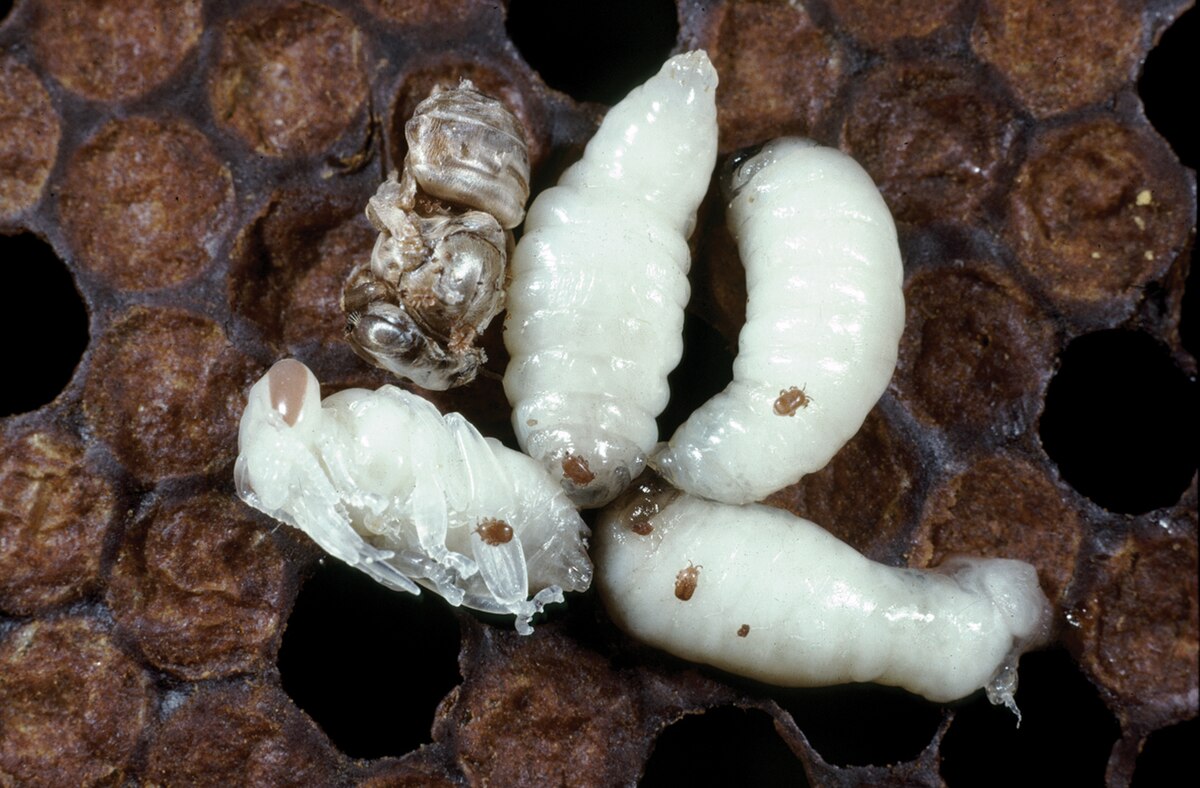
Tropilaelaps mites
Tropilaelaps (say “trop-ee-LAY-lups”) mites are parasites of bee brood, found across Asia and in Papua New Guinea. They are not established in Australia.
- What they look like: red-brown, about 1 mm long and 0.5 mm wide, with a narrow, flat outline. Immature mites inside capped cells are paler.
- How they differ from varroa: a Tropilaelaps mite is about as long as a varroa mite but less than half as wide, and it moves much faster. Varroa is wider and slower.
- Where you would notice them: on the brood combs and on the bees. Only about 3 to 4% of adult mites are found on adult bees. The rest are inside brood cells.
- Signs in the hive: an uneven brood pattern, dead brood partly uncapped, holes in cappings, deformed bees (twisted abdomens, stubby wings, missing legs), deformed bees crawling at the entrance, and a shrinking colony. These are the same signs as a heavy varroa infestation, so only an expert can tell them apart.
- Important: an alcohol wash or sugar shake is not likely to find Tropilaelaps, because the mites are rarely on adult bees. Looking at capped brood and the debris on the hive floor works better. If you test for varroa and see mites that look wrong (small, narrow, fast), stop and contact your state department.

Tracheal mite
The tracheal mite (Acarapis woodi) lives inside the breathing tubes of adult bees. It is not present in Australia.
- What it looks like: you can’t see it. It is microscopic and sits inside the bee.
- Signs: there are no reliable signs. In bad cases bees crawl at the entrance unable to fly, look disoriented, or hold their wings at odd angles (called “K wing”). Many other things cause the same signs, such as poor forage or pesticide poisoning.
- How it is found: only by dissecting bees under a microscope, done by a laboratory or your department. If you think you have unusual crawling bees and no other explanation, contact your state department.
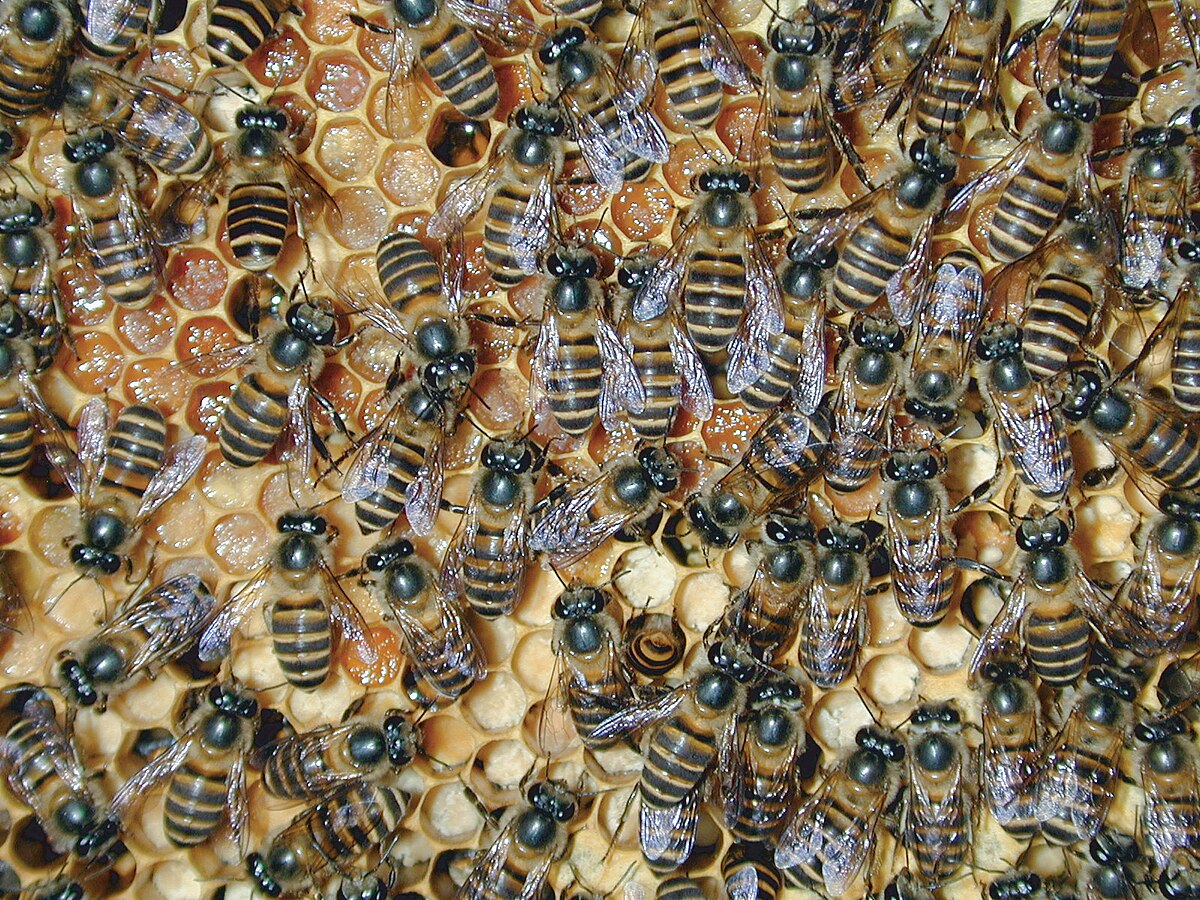
Asian honey bee (Apis cerana)
The Asian honey bee is a different species of honey bee. It has been in the Cairns region of Queensland since 2007, so it is a pest already present in one part of Australia. It has not been found elsewhere in Australia. It can’t be managed for honey or pollination, and the only method is to find and destroy the nest.
- How it differs from the European honey bee: it is about 10 mm long, so similar in size, but has less hair, more even abdominal stripes, and flies faster and more erratically around flowers.
- Swarms: can range from the size of a closed hand to a basketball.
- Nests: in cavities, often near houses. The bees go straight into the cavity and rarely crowd the entrance.
- A useful clue: drone brood cells have a raised wax cap with a pin-hole-sized pore.
Outside the Cairns area, an Asian honey bee would be a new incursion, so report any bee that looks like this. Don’t disturb, move or try to destroy the nest yourself. Report it and wait for the department’s instructions.

Asian hornet (Vespa velutina)
The Asian hornet preys on honey bees at the hive and robs brood to feed its own young. It is not in Australia.
- What it looks like: a large hornet. Workers are about 25 mm long. The body is velvet black or dark brown with a fine yellow band on each abdominal segment, and the fourth segment is entirely yellow-orange. The legs are brown with yellow tips, and the face is orange-yellow.
- Where you would notice it: hornets hovering at a hive entrance, catching bees, or a large paper-type nest in a tree or building.
- If you find a suspicious nest: note where it is, photograph it from a distance if you can, and don’t try to remove it.
If you think you’ve found one
- Stay calm and don’t move anything. Don’t move hives, frames or equipment out of the apiary, and don’t share gear with other beekeepers until you have advice.
- Note the location. Write down the address or GPS position, the date and the hive involved.
- Take photos. Take clear, close pictures of the mites, bees or nest, and of any damaged brood. Don’t handle live hornets.
- Contact your state or territory department. Describe what you have seen. The department will tell you whether to send a sample. Don’t post one unless asked.
- Follow the instructions you are given. Your state may ask you to keep the hive where it is until an officer has looked.
- Write it all down. Keep notes in your hive records.
Never assume it is something harmless, and never treat the hive for an unknown problem before you have had advice. Only a laboratory can confirm what you have.
How surveillance works
The National Bee Pest Surveillance Program is an early-warning system for exotic bee pests and pest bees. Plant Health Australia coordinates it, and government, industry and volunteers do the field work. Two methods stand out:
- Sentinel hives: healthy European honey bee hives of known condition, kept at high-risk sites such as seaports and airports. They are inspected regularly for external mites, and samples of adult bees are dissected for internal pests like tracheal mite.
- Catch boxes: empty hives that attract swarms. Swarms found in them, or on structures around ports, are identified and checked for exotic pests.
The program also uses manual netting for pest bees such as the Asian honey bee, testing of rainbow bee-eater pellets, and checks by hobby beekeepers in high-risk areas.
How you can help
- Check your hives regularly. Monitoring for varroa as set out on the varroa page is also how you would notice other mites. Keep records so that a change stands out.
- Know what normal looks like. Learn the brood and bee signs in the diagnosis guide.
- Report anything unusual. Strange bees, swarms near ports or ships, or mites that don’t look like varroa should go to your state department, even if you aren’t sure.
- Keep your registration up to date. See Registering your hives.
- Talk to your club or your state’s bee biosecurity officer. See Clubs and associations.
Photo credits
- Tropilaelaps mites: Denis Anderson, CSIRO, Wikimedia Commons, CC BY 3.0.
- Asian honey bees: Denis Anderson, CSIRO, Wikimedia Commons, CC BY 3.0.
Sources
Every fact on this page was checked against at least two independent sources.
- Tropilaelaps mitesBeeAware (Plant Health Australia)Official
- Tropilaelaps mitesExtension Australia (Professional Beekeepers)Research and industry
- Tracheal miteBeeAware (Plant Health Australia)Official
- Asian honey beeBeeAware (Plant Health Australia)Official
- Asian hornetBeeAware (Plant Health Australia)Official
- Pests and diseases in honey beesWA Department of Primary Industries and Regional DevelopmentOfficial
- How surveillance protects our beesBeeAware (Plant Health Australia)Official
- The National Bee Pest Surveillance ProgramScience Australia (Curious)Research and industry